Understanding the Difference Between Energy Management and Energy Efficiency
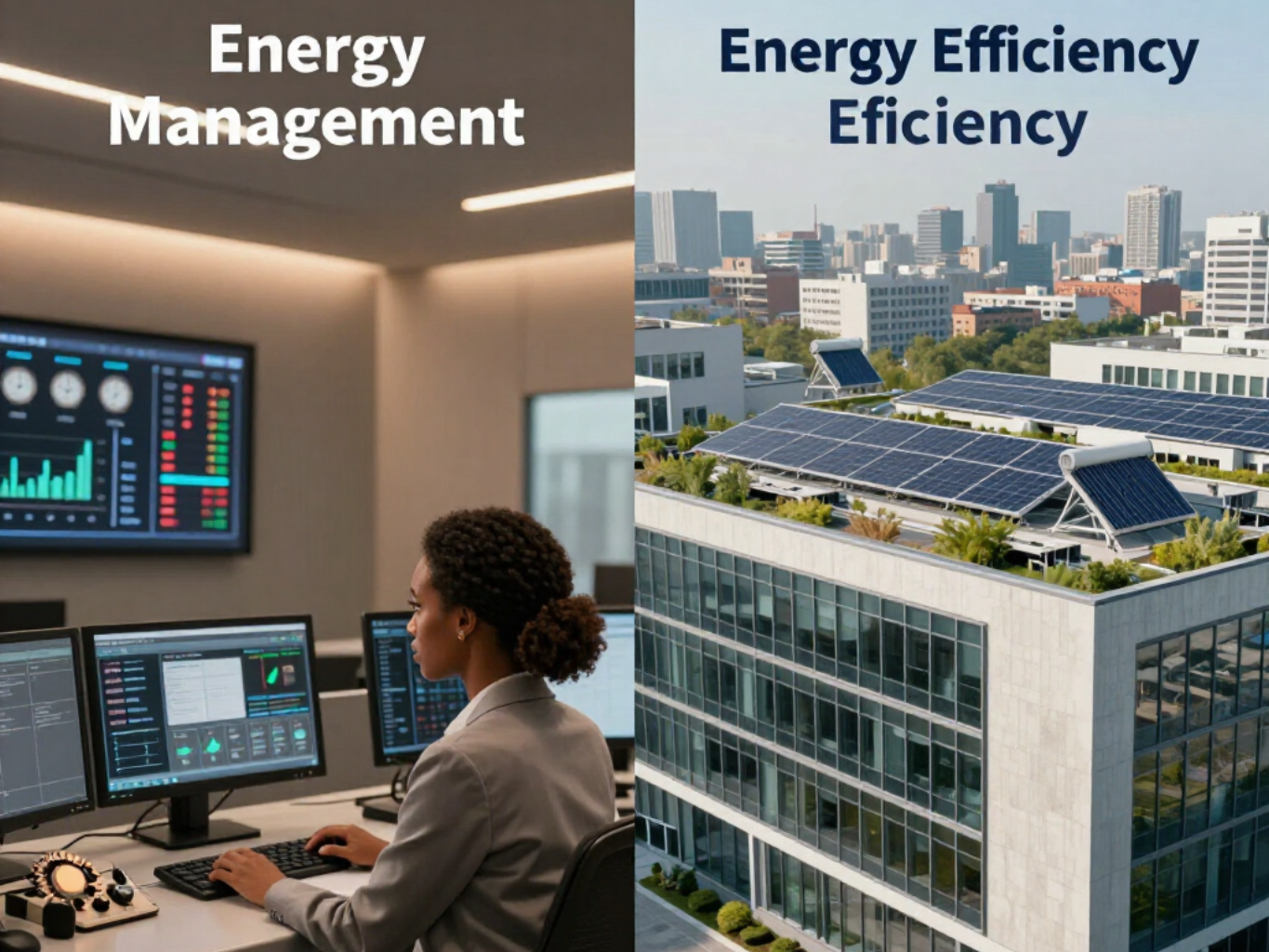
When it comes to reducing utility costs and improving building performance, terms like “energy efficiency” and “energy management” are often used interchangeably. While closely related, they refer to distinct strategies—and understanding the difference is critical for commercial property owners and facility managers looking to optimize operations in a cost-effective and sustainable way.
Both concepts are essential to lowering consumption, improving comfort, and meeting environmental goals. However, they serve different roles in how buildings perform and how savings are achieved over time.
In this article, we’ll clarify the difference between energy efficiency and energy management, explore how each contributes to utility savings, and explain why businesses in Minnesota need a combination of both to get the best results.
What Is Energy Efficiency?
Energy efficiency refers to the use of technologies, systems, or practices that reduce the amount of energy required to perform the same function. In simpler terms, it's about doing more with less—getting the same or better output using fewer energy resources.
Examples of Energy Efficiency in Commercial Buildings
- Replacing fluorescent lights with LED fixtures
- Installing high-efficiency HVAC systems
- Adding insulation or upgrading windows to reduce heat loss
- Using ENERGY STAR-rated equipment in kitchens or offices
- Upgrading to variable-speed motors and drives
- Retrofitting a building envelope to reduce infiltration
These types of improvements often involve capital investments and deliver measurable, persistent savings over time. Once implemented, they reduce the baseline level of energy consumption in the building.
What Is Energy Management?
Energy management, on the other hand, refers to the ongoing process of monitoring, controlling, and optimizing energy use. It includes tracking usage data, analyzing patterns, identifying waste, and adjusting operations in real time to avoid unnecessary costs.
Unlike energy efficiency upgrades, energy management is behavioral and operational. It requires active oversight, data visibility, and often automated systems to adjust settings based on occupancy, weather, or utility rate structures.
Examples of Energy Management Practices
- Monitoring real-time energy usage through dashboards
- Adjusting HVAC run schedules based on tenant occupancy
- Turning off lights and equipment during non-peak hours
- Participating in demand response programs
- Setting alerts for abnormal usage or system failures
- Reviewing utility bills monthly for cost anomalies
Energy management doesn't necessarily require new equipment, but it does require awareness, systems, and discipline to respond to how and when energy is being used.
Key Differences Between Energy Management and Energy Efficiency
| Feature | Energy Efficiency | Energy Management |
|---|---|---|
| Focus | Equipment and infrastructure | Operations and behavior |
| Timeframe | Long-term, static improvements | Continuous, real-time adjustments |
| Investment Required | Often requires capital expenditures | May require minimal upfront cost |
| Examples | LED lighting, efficient HVAC, insulation | Schedule changes, monitoring, load control |
| Goal | Reduce baseline energy use | Optimize usage patterns and reduce waste |
| Responsibility | Engineers, contractors, facility upgrades | Facility managers, energy teams, automation |
Both approaches are important, but they tackle energy use from different angles. Efficiency reduces how much energy is needed. Management controls when and how that energy is used.
Why Minnesota Businesses Need Both
In a climate like Minnesota—where temperatures range from sub-zero winters to hot, humid summers—energy usage can fluctuate dramatically. Simply upgrading equipment may not be enough to maintain consistent savings.
For example, a business may install high-efficiency HVAC units but still experience high energy bills if systems are running 24/7 due to outdated controls or poor scheduling. Conversely, real-time monitoring and smart controls can reduce waste from existing systems—but won’t solve the problem if the equipment itself is inefficient.
To get the best results, businesses need to pair energy-efficient upgrades with smart energy management practices.
Case Scenario: Office Building in Minneapolis
An 80,000-square-foot office building in Minneapolis underwent an LED lighting retrofit, cutting lighting energy use by 45%. However, six months later, the building’s overall electricity usage had barely changed.
A follow-up energy management assessment revealed that:
- Lighting systems were left on in unused areas overnight
- HVAC systems were running at full load on weekends
- Tenant plug loads spiked in the afternoons due to unscheduled equipment
After implementing a real-time monitoring platform and adjusting schedules based on occupancy, the building achieved an additional 18% energy savings, on top of the lighting retrofit.
Lesson: Energy efficiency provided the foundation—but energy management unlocked its full value.
How to Combine Both for Maximum ROI
To get the most from your energy strategy, follow this two-part approach:
1. Start with Energy Efficiency Upgrades
These improvements reduce the baseline demand and improve the performance of major systems. Focus on:
- HVAC modernization
- LED lighting
- Building envelope enhancements
- Equipment upgrades
Check with your utility provider or energy consultant for available rebates and financing programs.
2. Layer on Energy Management Practices
Once equipment is optimized, focus on how your team operates the building. This includes:
- Real-time energy monitoring
- Training facility staff on system controls
- Implementing scheduling, zoning, and automation
- Conducting regular utility reviews and load analysis
- Adjusting based on seasons, occupancy, and rate structures
With both strategies in place, you'll not only cut waste—you’ll also sustain long-term energy savings and avoid backsliding.
Tools That Support Both Approaches
Several systems and services can help Minnesota businesses implement both energy efficiency and energy management:
- Building Automation Systems (BAS): Centralized control of HVAC, lighting, and other systems
- Energy Monitoring Platforms: Real-time dashboards and alerts
- Submetering Systems: Measure usage by tenant, floor, or equipment
- Utility Bill Auditing Services: Ensure correct billing and detect errors
- Commercial Energy Audits: Assess baseline performance and prioritize upgrades
Eco Energy Solutions MN offers a full suite of services designed to help commercial properties combine efficient design with smart operational control.
Frequently Asked Questions
How do I start if I have no energy program in place?
Start with an energy audit to identify low-cost efficiency upgrades, then implement monitoring and control systems for ongoing management.
Do I need new equipment to start energy management?
No. Many energy management strategies—like schedule changes and behavioral training—can be implemented with your existing systems.
Which one should I focus on first?
Start with what delivers the fastest return. Efficiency upgrades offer lasting savings, while energy management ensures those savings continue over time.
Are there rebates for energy management systems?
Yes. Many Minnesota utility programs provide incentives for energy monitoring, BAS installations, and demand response participation.
Smarter Energy Starts With the Right Strategy
Energy efficiency and energy management are not competing approaches—they are two sides of the same coin. When combined, they provide a powerful framework to reduce costs, improve comfort, and make your building more sustainable.
Eco Energy Solutions MN LLC helps commercial property owners across Minnesota evaluate, implement, and maintain energy strategies that work. Whether you're retrofitting an aging building or fine-tuning an existing system, we can help you design a custom roadmap for maximum results.
To schedule a consultation or energy audit, visit:
https://www.minnesotaecoenergysolutions.com/contact
Recent Posts