Learn the ROI of energy efficiency upgrades for commercial properties in Minnesota. Discover what saves money, what to prioritize, and how to measure returns.

Investing in energy efficiency upgrades isn’t just good for the environment—it’s a smart financial move for commercial property owners and facility managers. With energy prices fluctuating and pressure mounting to reduce carbon footprints, many Minnesota businesses are turning to energy efficiency as a way to lower operational costs, improve asset value, and gain long-term savings.
But what’s the actual return on investment (ROI) of energy efficiency upgrades? How long do they take to pay off? Which upgrades are most effective for your building type, climate, and business goals?
In this guide, we break down the key factors that impact ROI, the most valuable efficiency upgrades for commercial properties, and how Minnesota businesses can accurately track results.
Why Energy Efficiency Is a Strategic Investment in Minnesota
Minnesota’s diverse climate—from freezing winters in Duluth to hot, humid summers in the Twin Cities—places significant strain on HVAC systems and energy infrastructure. Many commercial buildings across the state, especially older structures, operate with outdated equipment, inefficient lighting, or poor building envelope performance.
Energy efficiency upgrades are one of the few capital investments that pay for themselves over time. They offer recurring savings, potential rebates, increased tenant satisfaction, and better compliance with local regulations such as energy benchmarking and building performance standards.
Efficiency also plays a role in:
- Increasing property value
- Reducing maintenance costs
- Enhancing occupant comfort
- Qualifying for local or federal incentives
- Improving ESG or sustainability ratings
Understanding ROI for Energy Upgrades
Return on investment (ROI) in the energy efficiency context refers to how quickly the savings generated from an upgrade exceed the cost of implementing it. It’s usually calculated as:
ROI (%) = (Annual Savings / Initial Investment) x 100
However, measuring ROI isn’t always straightforward. Several variables can influence actual returns, including:
- Building size and usage patterns
- Age and type of equipment
- Energy rates and utility provider charges
- Availability of rebates or tax incentives
- Occupant behavior and system management
Most commercial energy efficiency projects in Minnesota see an ROI within 2 to 7 years, depending on the scope and type of upgrade.
High-ROI Energy Efficiency Upgrades for Commercial Properties
Certain upgrades consistently deliver better returns than others. Here are some of the most cost-effective and impactful options:
LED Lighting Retrofits
Upgrading fluorescent or incandescent lighting to LEDs offers one of the fastest paybacks—often within 1 to 2 years. LEDs reduce electricity consumption by up to 75% and last significantly longer, lowering maintenance costs.
HVAC Equipment Upgrades
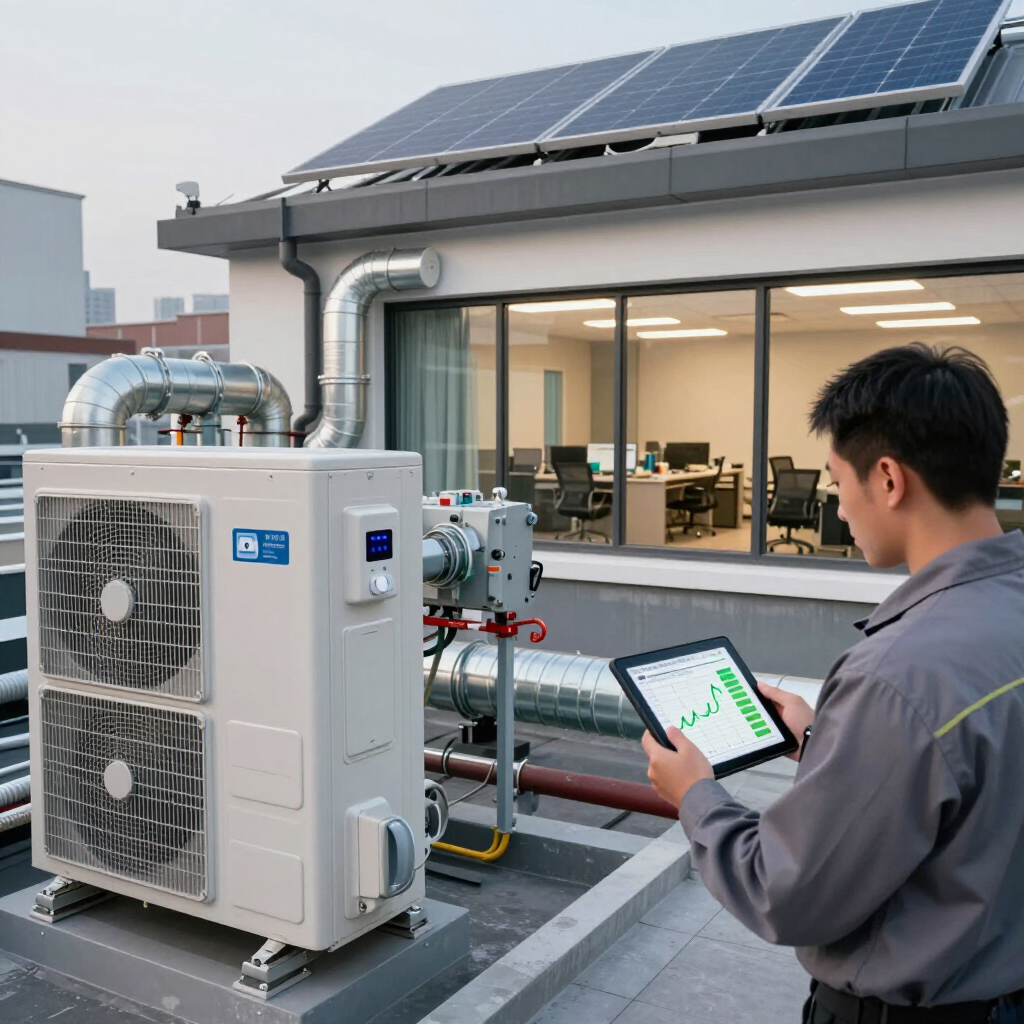
Replacing aging boilers, chillers, or rooftop units with high-efficiency models can cut energy use dramatically. Adding variable frequency drives (VFDs) to motors and fans further enhances efficiency.
HVAC upgrades often see payback in 3 to 5 years, with additional long-term savings in maintenance and reliability.
Building Automation Systems (BAS)
A modern BAS allows precise control over HVAC, lighting, and other systems. By automating schedules, occupancy settings, and seasonal adjustments, businesses can eliminate unnecessary runtime and reduce peak demand charges.
Payback varies but is typically within 3 to 6 years depending on system complexity and integration with existing infrastructure.
Envelope Improvements (Insulation, Windows, Air Sealing)
Improving the building envelope reduces heating and cooling loads. While upfront costs can be higher, envelope upgrades create persistent savings—especially in regions like Northern Minnesota where winter heat loss is significant.
Returns are slower but steady, often realized over 7 to 10 years or more.
Energy Monitoring and Submetering
Installing energy monitoring systems allows building owners to track usage in real time, identify waste, and optimize system performance. Submetering also enables tenant-level billing, reducing owner liability for overuse.
This upgrade supports other investments by ensuring savings are sustained and measurable. ROI depends on follow-through but often pays off in 2 to 4 years.
Case Study: ROI Example for a Mid-Sized Office in Minneapolis
A 25,000 sq. ft. commercial office building in Minneapolis implemented the following upgrades:
- LED lighting retrofit: $15,000
- HVAC controls upgrade (smart thermostats and VFDs): $20,000
- Energy monitoring system: $10,000
Annual energy savings: $14,000
Total investment: $45,000
Estimated simple payback period: 3.2 years
5-year net savings (after payback): ~$25,000
Beyond the financial savings, the building also saw reduced tenant complaints, improved ENERGY STAR benchmarking scores, and eligibility for a utility rebate from Xcel Energy.
Rebates and Incentives Available in Minnesota
One way to improve ROI is by taking advantage of local and state-level rebates. Some programs Minnesota businesses should consider:
- Xcel Energy Business Rebate Programs
- Minnesota Center for Energy and Environment (CEE)
- Property Assessed Clean Energy (PACE) financing
- Federal 179D Commercial Buildings Energy-Efficiency Tax Deduction
These programs can cover 20% to 50% of project costs depending on the type of upgrade. A professional energy audit will often uncover which incentives your building qualifies for.
Learn more about audits at:
Eco Energy Solutions MN –
Commercial Energy Audit
Measuring ROI Accurately: What to Track
To evaluate the true return of energy upgrades, it’s critical to monitor performance after installation. Some key metrics to track include:
- Monthly and annual utility bills
- Peak demand charges
- Occupant comfort levels or complaints
- Maintenance or equipment failure rates
- Energy use intensity (EUI) or ENERGY STAR score
Advanced energy analytics platforms and dashboards make this easy by comparing real-time usage to historical baselines.
Frequently Asked Questions
How do I know which upgrades will give me the best return?
A commercial energy audit is the best starting point. It identifies where your building is losing energy and prioritizes upgrades based on cost vs. savings potential.
Are energy efficiency upgrades tax-deductible?
Many upgrades qualify for federal tax deductions under Section 179D, and rebates may reduce your taxable income. Consult a tax advisor to confirm your eligibility.
Do I need a Building Automation System to see ROI?
Not necessarily. Smaller improvements like LED lighting or insulation still provide solid returns. A BAS enhances control and is ideal for larger or multi-system buildings.
Can I phase in upgrades over time?
Yes. A phased approach allows you to spread out costs while building momentum. Starting with low-cost, high-impact improvements (like lighting and controls) is often recommended.
Ready to Improve Your Building’s Efficiency?
If you're ready to reduce operating costs, increase building value, and improve sustainability, energy efficiency upgrades are the place to start. At Eco Energy Solutions MN LLC, we help businesses throughout Minneapolis, St. Paul, Rochester, and surrounding areas design energy strategies that maximize ROI and long-term performance.
We begin with a full utility and building audit, then recommend targeted upgrades with the best return for your unique facility. From lighting and HVAC to monitoring systems and BAS, we guide you from analysis to implementation.
Request a free consultation or energy audit today at:
https://www.minnesotaecoenergysolutions.com/contact
Recent Posts